
Frequency capping is a feature that attempts to limit the number of times your ads are shown to the same user within a certain time period. The goal is to avoid over-exposing the same Creative, which can lead to a negative user experience.
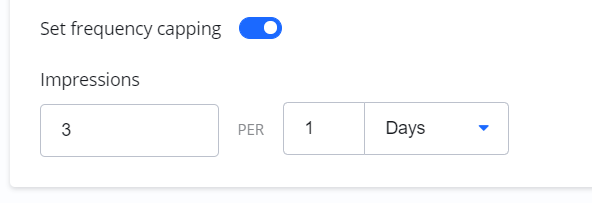
How it Works and Its Limitations
This technology is browser and cookie-based. Because of this, its effectiveness varies significantly depending on the user's device and settings.
|
Works Well On |
Works Less Well (or Not at All) On |
|---|---|
|
Personal desktop devices |
Shared devices (e.g., a family computer) |
|
Mobile devices |
Streaming services |
|
|
Web TV |
|
|
Devices where users have turned off cookies |
|
|
Devices where users have limited ad tracking |
Frequently Asked Questions
Q: What is Frequency capping?
A: Frequency capping is a feature used in a Campaign to limit how many times a single user sees the same ad in a given period.
Q: Why is Frequency capping useful?
A: Its main purpose is to prevent "ad fatigue" by avoiding showing the same ad to the same person too many times, which can improve the user's experience and your Campaign's performance.
Q: Why wouldn't Frequency capping work on a shared device like a Web TV?
A: Because the technology is based on browser cookies, it cannot distinguish between different people using the same device. It sees the "device" as a single user, making it impossible to cap the frequency for each individual person watching.
Q: Does Frequency capping work if users have cookies turned off?
A: No. If a user has disabled cookies in their browser, the technology cannot track ad exposures to that user, and frequency capping will not be effective.